


TMJ Massage Christchurch: Relief for Jaw Pain and Headaches

Wake up with a sore, tight jaw? Notice a click or a pop when you chew, yawn, or have a chat? Or maybe there’s a headache sitting at your temples that just won’t shift.
It might be your temporomandibular joint, or TMJ for short. When that joint and the muscles around it are unhappy, it’s usually called TMJ disorder.
Here’s the good bit. You don’t have to put up with it. TMJ massage in Christchurch can ease muscle tension, help your jaw move more freely, and take the sting out of the headaches and neck pain that tend to tag along. At BodySense Massage in Papanui, our registered massage therapists do focused TMJ treatment so you can get back to feeling comfortable.
We’ll go through what TMJ disorder actually is, what usually sets it off, how massage can help, and what happens at your first visit.
What Is TMJ Disorder?
You’ve got two temporomandibular joints, one on each side of your face, where your jaw meets your skull. They never really get a day off. Eating, talking, yawning, swallowing- it all goes through them. When the joints or the muscles around them get irritated or tight, or stop working together smoothly, that’s TMJ disorder.
Your jaw is hooked up to a lot of muscles in your face, head, neck, and shoulders. So the pain doesn’t always stay where it started. It wanders. That’s why many people are surprised to hear their headaches or stiff neck have anything to do with their jaw.
Common Symptoms of TMJ Disorder
Everyone’s a bit different, but these are the ones we hear about most:
Jaw pain or tenderness, especially first thing in the morning
Clicking, popping, or grinding when you open and close your mouth
Headaches or migraines, often around the temples
Neck and shoulder pain or stiffness
Muscle spasms in the face or jaw
A jaw that won’t open as wide as it used to
Jaw locking, where it feels stuck open or shut
Ear pain or pressure around the ears
A tired, achy face after chewing
If a few of those sound like you, it’s worth seeing a massage therapist who understands how the jaw works.
What Causes Jaw Pain and Clicking?
Hardly ever one thing. It’s usually a few small things stacking up over time.
Stress is a big one, and most of us hold it in our jaw without noticing. One client told us she only realised she was clenching when she caught herself white-knuckled at the lights on Papanui Road, jaw like a vice. Do that for hours, day after day, and the muscles wear out, and the joint starts to complain.
Grinding your teeth (bruxism) does something similar. It mostly happens while you sleep, so plenty of people only find out when a dentist or a partner mentions the noise.
Then there’s posture. Picture a long day hunched over a laptop with your head poking forward. Your neck and jaw end up holding extra weight the whole time. We see it constantly.
Tight muscles in your neck, shoulders, and upper back can tug on the muscles that run your jaw as well. A knock to the face, whiplash, or a long dental appointment can irritate the joint. And now and then, arthritis or wear inside the joint is part of the story.
Working out what’s behind your symptoms matters, because it changes how we treat you.
Can Massage Help TMJ Disorder?
For many people, yes. Massage can’t change the structure of the joint. But it can make a real difference to the muscle tension, trigger points, and tightness that cause so much of the pain. That’s a big reason TMJ massage has become a popular, drug-free option for people with jaw trouble.
When the muscles around your jaw loosen up, the joint often moves more easily. There’s less pressure on it, headaches can settle, and eating and talking start to feel normal again.
How TMJ Massage Works at BodySense Massage
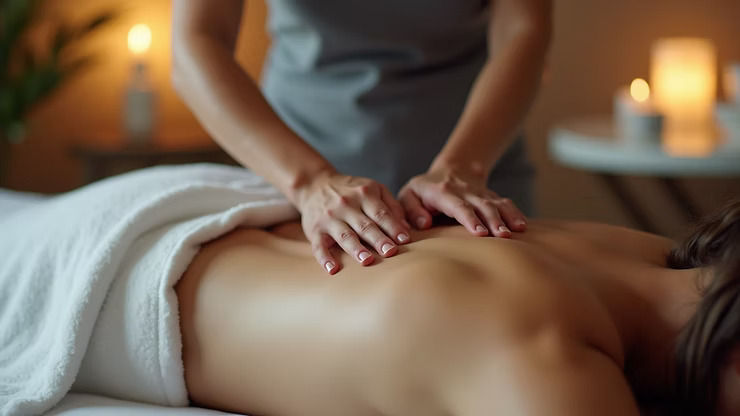
Our TMJ treatment is a lot more than a few minutes on your jaw. Jaw pain is tied in with your neck, your shoulders, and even your hips, so looking at the whole picture usually gets better and longer-lasting results.
A session at our Papanui studio can include:
Neck and shoulder work, which eases the pull on your jaw and helps with posture tension. Some of this is similar to our deep tissue massage.
Gentle massage of your face, head and scalp, including the temples and cheeks, to relax the muscles you chew and clench with.
Intraoral massage, which means working inside the mouth as well as outside. It lets your therapist reach deeper jaw muscles that are hard to release from the outside alone. We go slowly, and you’re in charge of your comfort and consent the whole way.
Trigger point therapy for those tight, tender knots that can send pain somewhere else. Releasing the ones in your jaw, temples, and neck can ease headaches and facial pain.
Myofascial release, using slow, steady pressure to soften the tight connective tissue around your jaw and neck.
Hip mobility work. Yes, hips. Tension through the lower body can change how your head and neck sit, so we include it when it helps.
No two sessions look the same. Before we start, your therapist will talk through your symptoms, history, and goals, and they’ll change pressure and technique as you go.
Massage for TMJ Headaches and Migraines
Lots of people book in for headaches with no idea their jaw is involved. A common story is a dull ache across the temples every afternoon, blamed on screen time or not enough water. But tight jaw and temple muscles are a well-known source of tension-type headaches, and a tense neck can make them worse.
Massage can help by:
relaxing the main chewing muscles, the temporalis and masseter
releasing tension in your neck and at the base of your skull
improving circulation to tight areas
calming your nervous system, which can take some of the clenching out of your day
We can’t promise massage will cure migraines, and we wouldn’t want to. But many clients notice their headaches come less often and feel milder after a course of treatment.
Can TMJ Cause Neck and Shoulder Pain?
Yes, very much so. Your jaw, neck, and shoulder muscles work as one connected chain. When the jaw is overworked, the neck muscles tighten up to help out, and that tension runs down into your shoulders and upper back.
It goes the other way too. A stiff, hunched neck from long days at a desk can drag on the jaw.
So neck and shoulder work is a big part of TMJ treatment. We look at the whole area instead of chasing one sore spot, and clients often say their posture feels better afterwards. If your neck and shoulders are the main complaint, our remedial massage might suit you too.
What to Expect at Your First TMJ Massage Appointment
If you’ve never had TMJ massage before, here’s roughly how it goes at our Papanui studio.
We start with a chat. We’ll ask about your symptoms, when they began, any grinding or clenching, your dental history, and what makes things better or worse.
Next is a quick assessment. Your therapist may check how far your jaw opens, how it moves, and how tight your neck and shoulders are.
Then the treatment. Depending on what you need, that’s a mix of neck, shoulder, face, and head work, plus intraoral work if it’s appropriate and you’re happy to go ahead.
Before you leave, you’ll get a few simple things to try at home, such as gentle jaw stretches, posture tweaks, and ways to ease clenching during the day.
So, is it painful? It shouldn’t be. You might feel some tenderness over the tight spots, but the pressure should always stay within your comfort level. If you’d like it lighter, or you need a pause, just say so.
How Many Massage Sessions Do You Need for TMJ?
It depends on how long you’ve had symptoms and what’s behind them. Many people feel some relief after the first visit. Lasting change usually takes a short run of treatments, though, often a few sessions one to two weeks apart, then the odd top-up when you need it.
Your therapist will suggest a plan that suits you, and you can change it as you go.
Simple Tips to Ease Jaw Pain Between Appointments
A few small habits can help your massage results last longer:
Catch yourself clenching. Keep your teeth slightly apart and let your tongue rest gently on the roof of your mouth.
Try gentle heat. A warm pack on your jaw and neck can soothe tight muscles.
Stick to softer foods during a flare-up, and skip chewing gum and anything very chewy.
Go easy on wide yawns and big bites when your jaw is sore.
Keep your screen at eye level, and your shoulders relaxed.
Look after your stress levels. Slow breathing, stretching, and a regular relaxation massage can all ease the tension you carry in your face.
You’ll find more tips like these on the BodySense blog.
When Should You See a Dentist or Doctor Instead?
Massage can be a helpful part of TMJ care, but it’s no substitute for medical or dental advice. Please see a dentist or doctor if you have:
Jaw locking that doesn’t release
Sudden or severe pain, or pain after an injury
Swelling in your face or jaw
Difficulty swallowing or breathing
Pain that keeps getting worse even with treatment
Many people get the best results by combining care. A dentist might fit a night guard for grinding, for example, while regular massage looks after the muscle tension. Our therapists are happy to work alongside your other health professionals.
Why Choose BodySense Massage for TMJ Therapy in Christchurch?
Our therapists are Level 6 Registered Massage Therapists, registered with Massage New Zealand.
We’ve got years of experience with deep tissue work, trigger point therapy and relaxation techniques.
We take a whole-body approach, so we look at what’s driving the problem around your jaw and not just the sore spot.
Our Level 6 therapists are accepted by Southern Cross, so you may be able to claim. Check your policy for details.
Our calm, comfortable studio is on Harris Crescent in Papanui, an easy drive from most of Christchurch.
Book Your TMJ Massage in Christchurch
You don’t have to put up with a sore jaw, clicking or constant headaches. With the right treatment, many people feel looser, calmer and more comfortable within a few sessions.
If you’re after TMJ massage in Christchurch, BodySense Massage in Papanui is here to help. We’ll listen, check what’s going on, and put together a plan that suits you.
You can book online, or call us on 027 782 2344 if you’d like to ask a question first. Come in, let the tension go, and get back to eating, talking and sleeping comfortably.
BodySense Massage, 36 Harris Crescent, Papanui, Christchurch


Comments